2026 Race Intelligence
China 2026
A control race defined by structural hierarchy rather than open contest. The leading Mercedes layer remains stronger and more stable than Ferrari across the decisive phases of the event.
Front runners — control layer
Field-relative performance of the leading drivers across the race.
Field Advantage — Front Runners
RUS · ANT · LEC · HAM
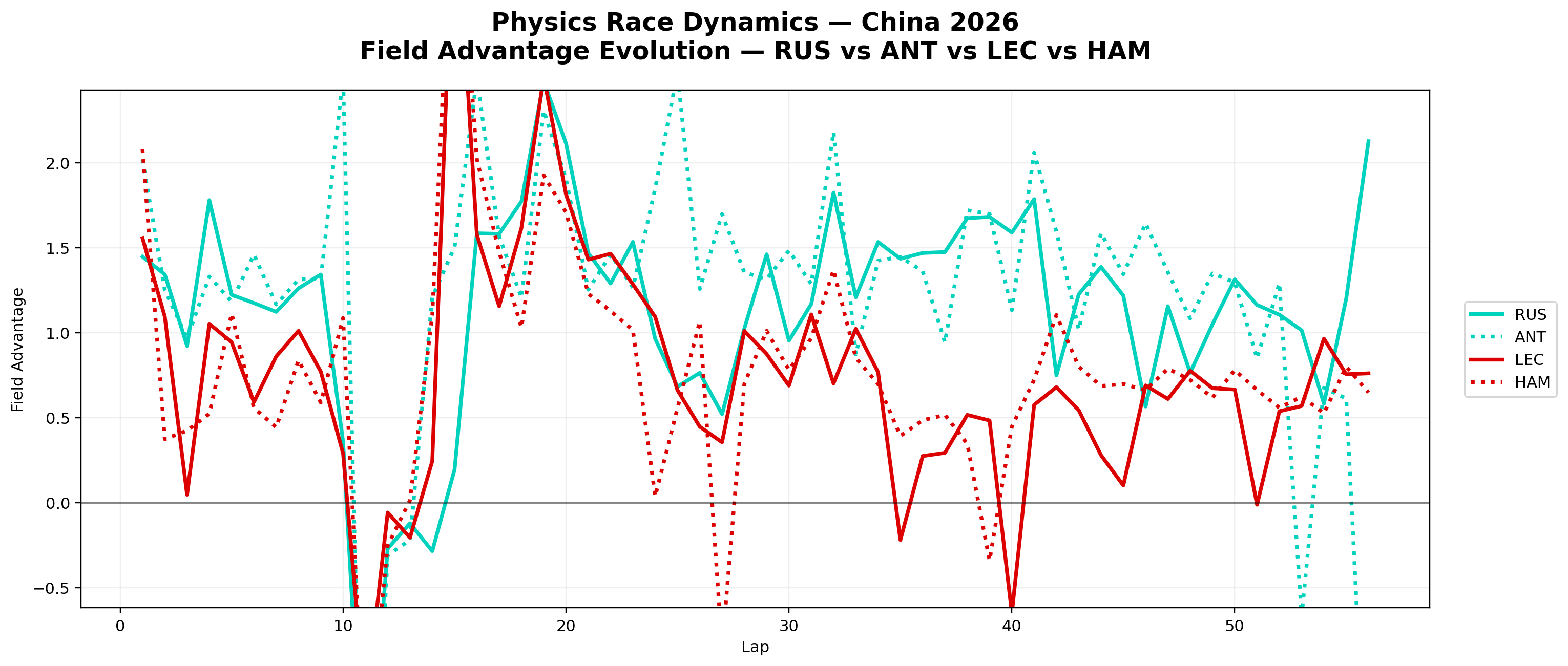
The front-runner field shows a clear structural separation. Mercedes occupies the strongest and most stable control band of the race, while Ferrari remains competitive but structurally secondary.
This identifies race control directly. The graph does not merely show who was fast. It shows which driver layer was sustainably converting race conditions into structural advantage.
Mercedes internal reading
Structural difference within the leading team.
Sector Advantage Map — RUS vs ANT
China 2026 · Mercedes internal comparison
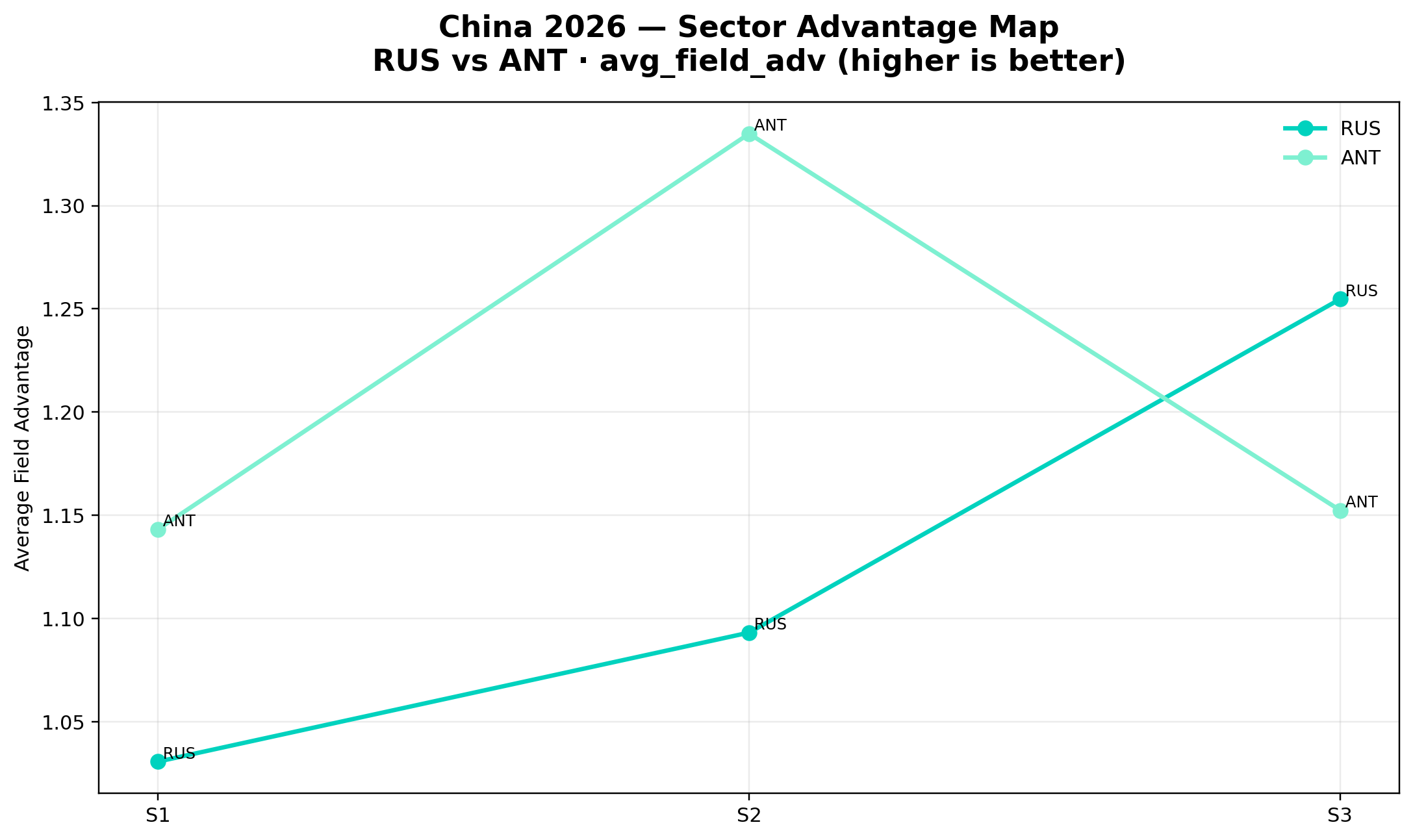
Within the Mercedes layer, Antonelli appears as the cleaner control state. His field profile is stronger and more stable, which is consistent with victory conversion rather than isolated pace.
Russell remains structurally strong, but below Antonelli’s control profile. The graph supports a distinction between two fast drivers and one driver holding the superior race-state condition.
This is where QEIv18™ becomes decision-relevant: it separates team strength from driver-level control quality inside the same front-running system.
Young drivers — structural profile
Comparative structural behaviour of emerging drivers under the same race conditions.
Field Advantage — Young Drivers
ANT · BEA · LIN · HAD · COL
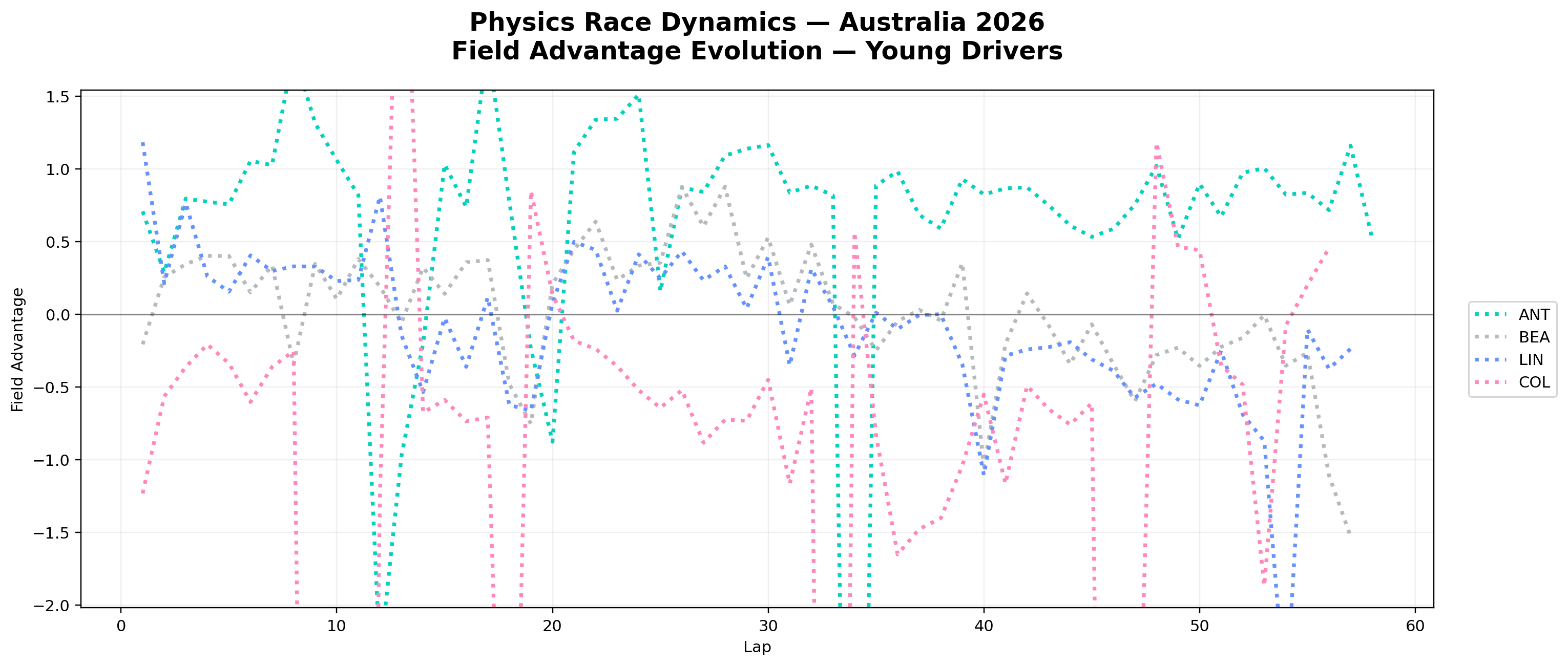
Antonelli clearly leads the young-driver field in structural performance. The signal is not based on isolated flashes, but on sustained field advantage over the race.
The remaining group shows more variable structural profiles. That makes the China young-driver graph useful not as a popularity comparison, but as an early indicator of who is already able to sustain competitive race-state control.
Sector Intelligence
China sector analysis confirms the control structure observed in the race. Antonelli leads S1, S2, and S3, indicating complete structural dominance across the lap rather than phase-specific strength.
This provides a deeper explanation of the result: the win was not built on a single favorable segment, but on sustained superiority across every sector of the circuit.